
Site Dev · Case study
How we redesigned the City of Springfield website
From a crowded, carousel-led city site to a calm WordPress experience built around what residents come to do: pay, report, apply, find and get involved. Here is the research, structure and system behind it.
- Legacy menu items, now 5
- 10
- Quick links regrouped
- 21
- Service previews
- 9
- Structured content types
- 6
- URLs verified at launch
- 35
- Design personas
- 3
The challenge
A city site organized around departments, not residents
Springfield’s old website had ten top-level menu items, 21 equally weighted quick links and a rotating carousel competing with news, events and a calendar widget. Residents had to know which department owned a task before they could find it.
The goal: a WordPress site the city’s own staff can keep current, where the top tasks are one click from the home page, every service follows the same details → review → confirmation pattern, and nothing pretends to be a real transaction.
Project snapshot
- Client
- City of Springfield (fictional)
- Engagement
- Municipal website redesign on WordPress
- Process
- 4 phases · Discover, Define, Design, Develop
- Team
- Strategy, UX, UI, content, WordPress development, QA
- Platform
- WordPress 7.1 (block theme) · PHP 8.2
- Hosting
- GoDaddy cPanel · springfield.davinci-x.com
Before & after
From information overload to clear next steps
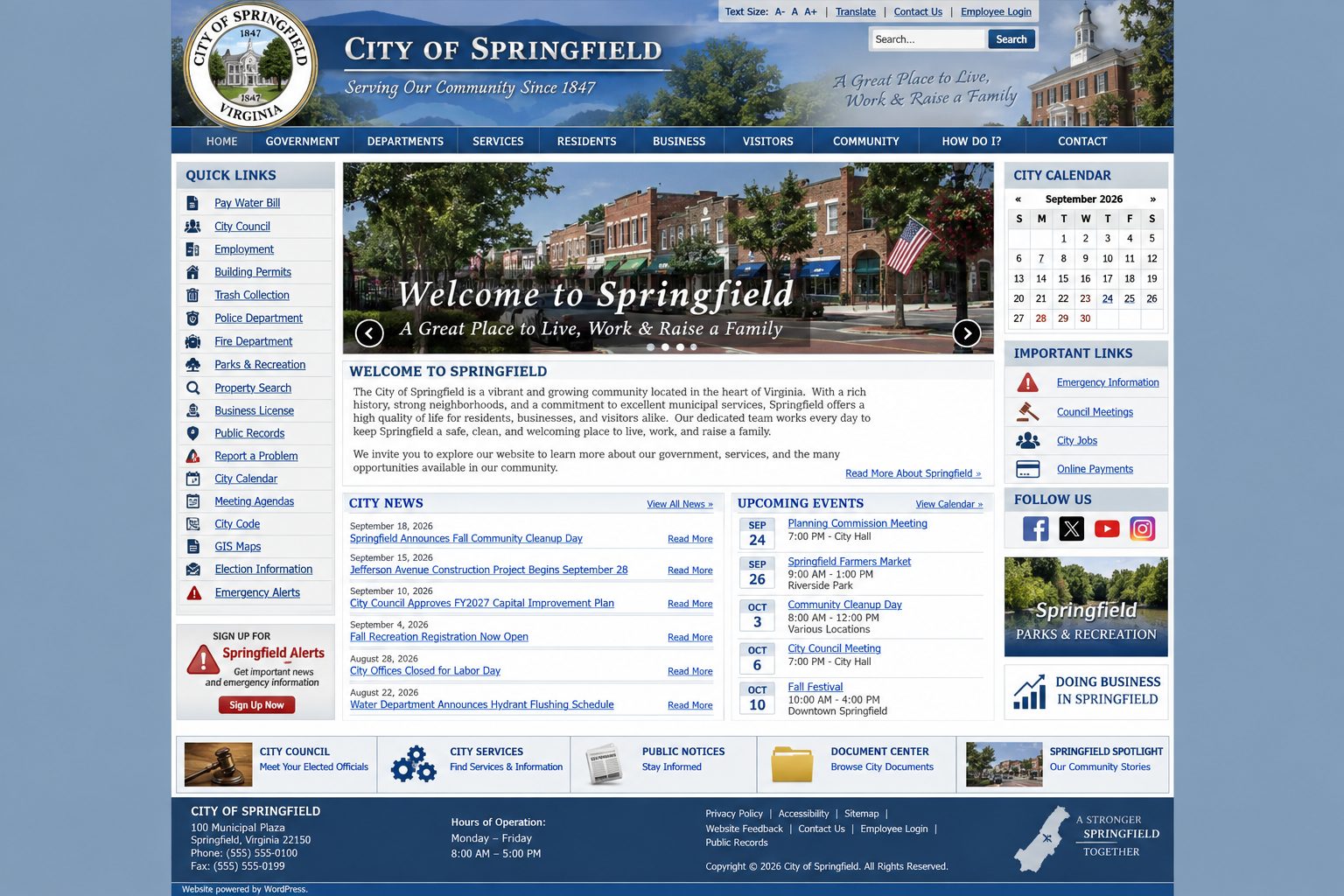 Before
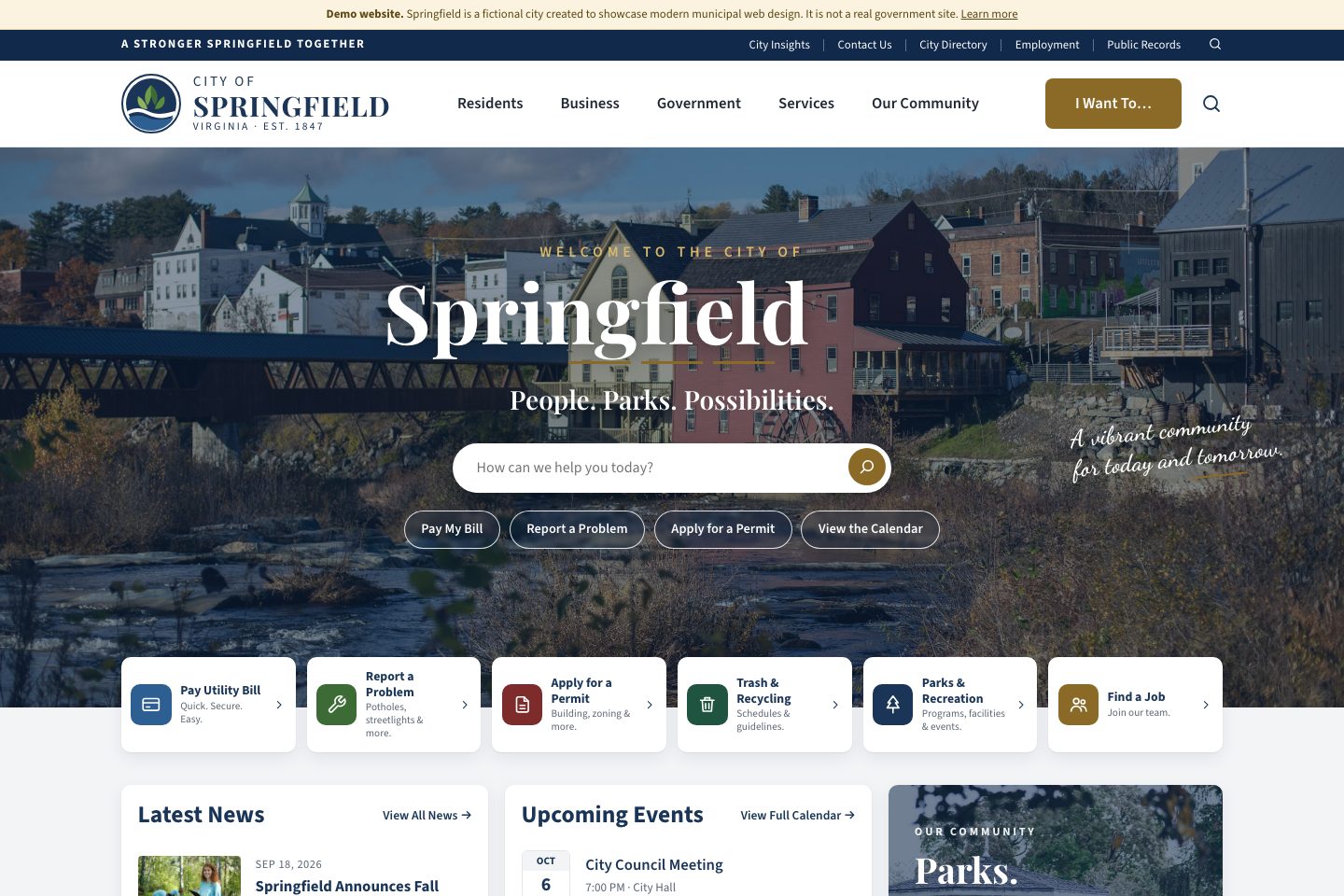 After
Our process
Four phases, each with something to show
- 01
Discover
Review of the legacy city site, resident tasks, peer municipal sites and the content that had to carry over.
- 02
Define
Personas, information architecture, the sitemap and the content migration plan.
- 03
Design
Service-form flows, wireframes for the key templates and the WordPress design system.
- 04
Develop
Block theme, patterns, service previews, City Insights, QA and GoDaddy launch.
Deliverables
Explore the work
Project Brief & Strategy
Goals, success measures, scope, the legacy-site review, peer comparison and risks for the Springfield redesign.
ViewPersonas & Journey Maps
Three design personas (resident, business owner and city editor) with goals, frustrations and journeys.
ViewSitemap & Information Architecture
Every WordPress page, archive, service preview and admin area, organized around what residents come to do.
ViewContent Migration Plan
How the old city site's pages, news, events and business listings moved into structured WordPress content.
ViewUI/UX Flow Charts
Service-form, review and confirmation flows, City Insights tracking and the staff editing journey.
ViewWireframes
Low-fidelity desktop and mobile layouts for the key templates, with annotations.
ViewDesign System & Style Guide
The theme.json palette, typography, block patterns, components, imagery and civic voice.
ViewWordPress Build & QA
Block theme structure, content model, hosting, accessibility, testing and launch readiness.
ViewDesign principles
Tasks before departments
Residents shouldn’t need an org chart to pay a bill or report a pothole.
One pattern for every service
Details, validation, review, confirmation. Learn it once, use it everywhere.
Honest demos
Every simulated payment, permit or report says so, and stores nothing personal.
Editable by the city
Pages, news, events and businesses are ordinary WordPress content, not hard-coded.
Springfield, its government, people and businesses are fictional. This is a demonstration website. This case study demonstrates process and deliverables for portfolio purposes.